

How Does Flat Rack Container Improve Cargo Transport Efficiency?
2026-04-21
Article Summary
Flat rack containers are specialized shipping solutions designed for oversized, heavy, or irregular cargo that cannot fit into standard enclosed containers. This article explores how flat rack containers enhance logistics efficiency, reduce handling risks, and solve complex transportation challenges. You will learn their structure, applications, advantages, selection criteria, and safety considerations, along with practical insights for global shipping operations.
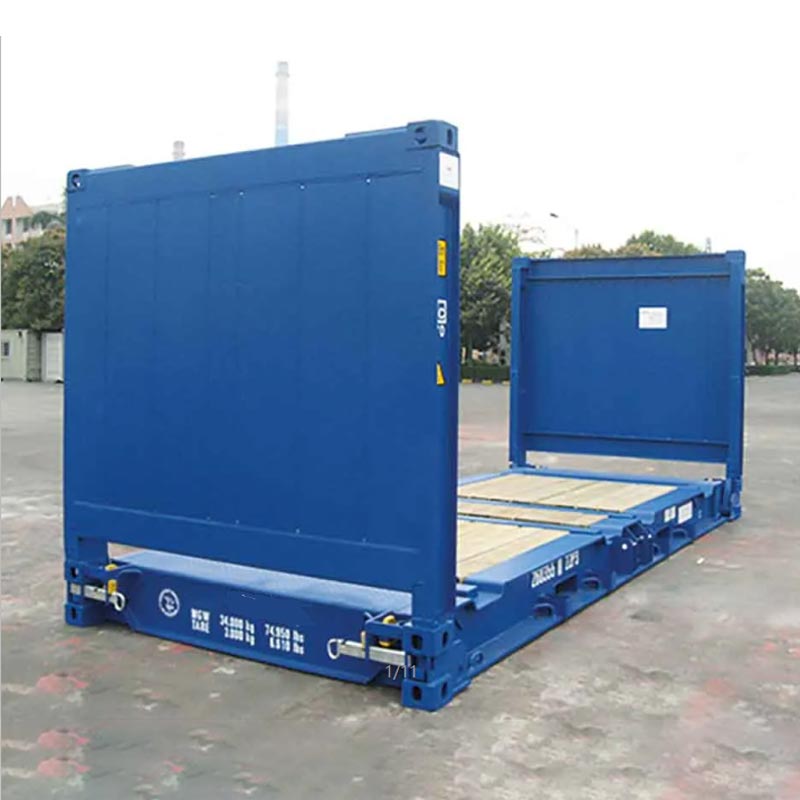
Table of Contents
- Introduction to Flat Rack Containers
- Structure and Design Features
- Key Benefits in Cargo Transportation
- Common Industrial Applications
- Flat Rack vs Standard Container
- How to Choose the Right Flat Rack Container
- Loading and Securing Guidelines
- Safety and Risk Management
- Frequently Asked Questions
- Conclusion
Introduction to Flat Rack Containers
In global logistics, not all cargo fits neatly into standard shipping containers. Machinery, construction equipment, vehicles, and industrial components often exceed conventional dimensions. This is where the flat rack container becomes essential.
Unlike enclosed containers, flat racks feature open sides and sometimes collapsible end walls, allowing cargo to be loaded from the top or sides. This flexibility significantly improves handling efficiency and enables transport of oversized goods that would otherwise require costly custom solutions.
Structure and Design Features
A flat rack container is engineered for strength and adaptability. Its structural design focuses on supporting heavy loads while remaining compatible with standard shipping systems.
- Base frame: Reinforced steel platform designed for heavy cargo.
- End walls: Fixed or collapsible depending on configuration.
- Open sides: Allow oversized width cargo.
- Lashing points: Secure tie-down points for stability during transit.
For reference product specifications, you may review: Flat Rack Container Product Page
Key Benefits in Cargo Transportation
Flat rack containers solve multiple logistics challenges. Their advantages go beyond simple space accommodation.
| Benefit | Description |
|---|---|
| Flexibility | Accommodates oversized and irregular cargo shapes. |
| Efficiency | Reduces need for disassembly of large machinery. |
| Cost Reduction | Minimizes special transport arrangements. |
| Durability | Built for heavy-duty industrial loads. |
These benefits make flat rack containers a preferred choice in heavy logistics operations worldwide.
Common Industrial Applications
Flat rack containers are widely used across multiple industries where cargo size and weight present transportation difficulties.
- Construction equipment (excavators, loaders)
- Industrial machinery and generators
- Vehicles including trucks and boats
- Steel structures and pipes
- Wind energy components such as turbine blades
Their adaptability ensures smooth logistics flow in both domestic and international shipping networks.
Flat Rack vs Standard Container
Understanding the differences between flat rack containers and standard containers helps businesses choose the right solution.
| Feature | Flat Rack Container | Standard Container |
|---|---|---|
| Structure | Open sides, reinforced base | Fully enclosed box |
| Cargo Type | Oversized or irregular goods | Standard boxed cargo |
| Loading Method | Top and side loading | Rear door loading |
| Flexibility | High | Limited |
How to Choose the Right Flat Rack Container
Selecting the correct flat rack container depends on several operational factors. Poor selection can lead to inefficiency or safety risks.
- Cargo dimensions: Ensure compatibility with length, width, and height.
- Weight capacity: Match container strength with load requirements.
- Route conditions: Consider transport mode and handling equipment.
- End wall type: Fixed or collapsible based on stacking needs.
Loading and Securing Guidelines
Proper loading is essential to ensure cargo safety during transit. Flat rack containers require careful planning and secure fastening.
- Inspect container structure before loading.
- Distribute weight evenly across the base.
- Use industrial-grade lashing equipment.
- Secure cargo at multiple anchor points.
- Perform stability checks before shipment.
Failure to properly secure cargo may lead to shifting, damage, or regulatory issues during transport.
Safety and Risk Management
Safety is a critical component of flat rack container usage. Due to the nature of open-frame design, additional precautions are necessary.
- Regular inspection for structural integrity
- Compliance with international shipping standards
- Use of certified securing equipment
- Proper training for loading personnel
Implementing these measures reduces operational risks and ensures cargo arrives intact.
Frequently Asked Questions
Q1: What is the main advantage of a flat rack container?
It allows transportation of oversized cargo that cannot fit into standard containers.
Q2: Can flat rack containers be stacked?
Yes, most models are designed with stacking capability when properly loaded and secured.
Q3: Are flat rack containers reusable?
Absolutely. They are designed for repeated industrial use under harsh conditions.
Q4: What industries use them most?
Construction, energy, manufacturing, and heavy equipment transport industries rely heavily on them.
Conclusion
Flat rack containers play a vital role in modern logistics by enabling safe and efficient transport of oversized cargo. Their open structure, strong build, and adaptability make them indispensable in global supply chains where standard containers fall short.
Businesses looking to optimize their heavy cargo transportation should carefully evaluate flat rack solutions to reduce costs, improve safety, and streamline operations.
For reliable industrial-grade solutions, Container Family provides high-quality flat rack container systems designed for demanding logistics environments. If you are planning your next shipment or need customized solutions, Container Family contact us to discuss your requirements and get expert support.