

Insole Factory: A Behind-the-Scenes Look at How Premium Insoles Are Made
2026-09-18
Ever wonder why some insoles cost ten times more than the foam pair at the drugstore? The answer sits inside a factory where every layer is pressed, cut, and inspected by hand—and where YONGFENG has spent years refining the process. This behind-the-scenes look walks you through the steps that turn raw materials into premium insoles built to outlast your shoes.
What Goes Into a Premium Insole Starts Long Before the First Cut
The story of a truly supportive insole begins in places most people never see: the tannery where leather hides are selected for breathability and grain tightness, the cork oak groves where bark is harvested without harming the tree, and the workshop bench where a single pair is matched by hand before the first template is traced.
Long before any cutting blade touches the material, a premium insole has already been shaped by decisions about density, flex point, and moisture management. A good maker will reject entire batches of foam or cork that vary by even a few percentage points in rebound, because that inconsistency shows up months later as a collapsed arch or a heel that no longer cups the foot.
Then there is the quiet craft of layering: a firm base for stability, a softer mid-layer for shock absorption, and a top surface chosen not just for comfort but for how it behaves after hundreds of hours of friction and sweat. That kind of foresight cannot be rushed, and it is why the first cut is really the last step in a much longer conversation between material, anatomy, and time.
Inside the Design Studio: Mapping Pressure Points and Gait Lines
A roll of tracing paper stretches across the worktable, pinned at the corners with worn metal weights. Underneath it, a series of ink footprints records where the body leans hardest—heel strike, the outer edge of the midfoot, the push-off beneath the big toe. These aren't abstract diagrams; they come from pressure mat sessions and slow-motion treadmill footage, translated by hand into contour lines that show how weight migrates through a single step.
In the studio, the conversation rarely starts with materials or color. It starts with those mapped zones. A raised arch support is drawn as a soft ellipse, its edges feathered so the correction doesn't create a new hot spot. The lateral heel gets a denser foam note, while the forefoot is marked for a more abrasive-resistant tread because that is where the final toe-off grinds against pavement. Every pencil stroke on the vellum corresponds to a measured kilo of pressure or a degree of pronation.
The gait line itself—the curved path from heel contact to toe release—is never perfectly straight, and that's the point. Designers trace its wanderings across dozens of wearers, looking for clusters and outliers. A shoe that respects these mapped truths will feel less like a correction and more like an extension of the foot's own logic. The last is then sculpted around that line, with the pressure map pinned beside it like a second opinion.
The Cutting Floor Is Where Tolerance Gets Redefined
On a modern cutting floor, the old assumptions about what can be held within a few microns fall apart. Operators and engineers constantly test the boundaries of precision, using thermal compensation, vibration damping, and in-process measurement to chase tolerances that were once reserved for climate-controlled metrology labs. The floor itself becomes a living argument that tolerance is not a fixed spec but a moving target.
Every tool change, every chip evacuation strategy, every micro-adjustment of spindle speed quietly redefines what the process can deliver. A batch of parts that ran within ±0.005 mm yesterday might be nudged to ±0.003 mm today by better fixturing or a sharper insert. Tolerance stops being a number on a drawing and becomes a negotiation between material, machine, and method.
This redefinition is rarely announced. It happens in the accumulated know-how of machinists who feel a 0.002 mm drift in their hands, in the data logs that show a process drifting toward a new capability, and in the scrap bin that slowly empties. The cutting floor, noisy and greasy, is where precision gets earned rather than promised.
Building Up Layers: Why Premium Insoles Never Feel Flat
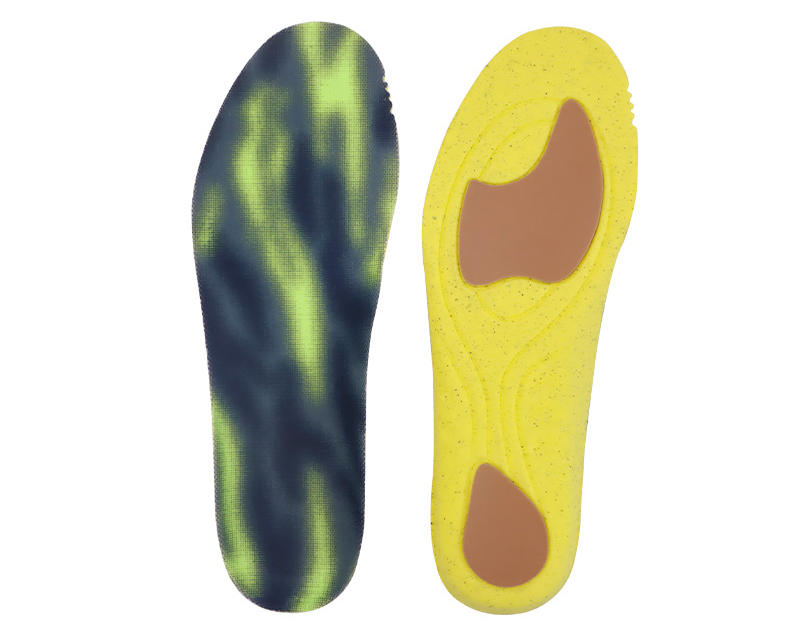
Most insoles are just a slab of foam with a fabric top. Premium versions build from the ground up: a firm base layer that resists collapsing, a middle layer tuned for rebound, and a top layer that manages moisture and friction. Each layer has one job, and when they stack correctly, the foot sinks just enough to feel cradled without losing its natural position.
That layered approach also explains why cheaper insoles go flat after a few weeks. Without a stable base, the softer foam above it compresses into a pancake. Premium insoles keep their contour because the layers don't all squash at the same rate. The bottom holds shape, the middle returns energy, and the top stays smooth against the sock. The result is a step that feels alive on mile one and mile fifty.
Hand Finishing: The Step Most Factories Skip
Walk through most production floors and you'll see rows of machines spitting out parts at impressive speeds. What you won't see is anyone slowing down to run a finger along an edge, buff a corner by feel, or inspect a surface under raking light. Hand finishing gets cut because it doesn't fit a spreadsheet—it's slow, it relies on skilled touch, and it can't be automated without losing the very thing that makes it valuable.
That skipped step leaves a specific kind of fingerprint: faint tool marks under a coat of paint, a slight ripple in a supposedly flat panel, edges that catch the light instead of rolling softly. Machines are brilliant at repeatability, but they don't notice the subtle inconsistencies that human hands are built to find and fix. Without that final pass, pieces go out looking almost right—enough to pass a quick glance, not enough to feel finished.
The factories that still do it tend to treat hand finishing less like a task and more like a quiet audit. A finisher might spend twenty minutes on a single drawer front, sanding with the grain, feeling for dips, rubbing in oil until the wood goes from dull to deep. It's not the most efficient line item, but it's the one that separates pieces you replace from pieces you keep.
The Last Look: How a Flawed Insole Never Leaves the Factory
At the end of the line, a pair of hands picks up the insole—not randomly, but with the familiarity of someone who has caught defects for years. The light above the inspection table is angled to throw shadows across the arch and heel, revealing ripples that a passing glance would miss. Every insole gets that one final look, a moment where the factory decides if it ships or gets pulled.
A misplaced stitch, a foam density that’s slightly off, or a gel pad that shifted during molding—none of these pass unnoticed. The inspector presses the ball of the foot area, bends the toe, flips the insole over to check the bond between layers. If the texture feels wrong or the edges don’t lie flat, it goes into a separate bin without a second thought.
That bin is not a suggestion box; it’s the end of the road. The flawed insole is logged, tagged, and broken down for material recovery where possible. The factory floor doesn’t celebrate rejecting work, but it knows that a single defective insole reaching a shoe means a return, a bad review, and a crack in trust that no discount can patch.
FAQ
Premium insoles usually start with a dense, slow-rebound foam like polyurethane or EVA blends, often layered with memory foam for initial softness. Many factories also add natural cork, leather tops, or antimicrobial bamboo charcoal fabric. The difference is in the thickness and density: cheap insoles collapse after a few weeks, while these keep their arch support for over a year.
Most lines use CNC-cut molds for the base shape, then workers hand-check each pair against a master template. Laser guides mark where arch pads and metatarsal bumps need to sit. If a batch drifts by even two millimeters, the whole run gets pulled and recalibrated. It's tedious, but that's why premium brands trust these factories.
Surprisingly, yes. Machines handle the heavy cutting and heat-pressing, but the final layer—like stitching a leather top cover or trimming excess gel—often needs human fingers. Skilled workers can feel if a gel pad is slightly off-center just by pressing their thumb along the edge. That tactile check catches flaws no camera reliably spots.
Picture a long steel bench with heated aluminum molds, each one hissing open every forty seconds. Workers pull out warm, flexible shells and immediately place them on cooling racks shaped like feet. The air smells faintly of hot rubber and adhesive. You hear the rhythm of pneumatic presses and the occasional snap of a trim knife against plastic.
Each batch faces a three-step gauntlet: compression testing to measure rebound after 100,000 simulated steps, flex testing to see if the arch area cracks, and a wash test for odor-resistant top fabrics. Random samples are cut open to inspect layer bonding. If the foam delaminates even slightly, the entire lot is rejected and recycled.
They rely on bulk material contracts and modular mold designs. One base mold can produce three different arch heights by swapping a small insert, so retooling costs stay low. Labor is focused on the few steps that truly need a human eye, while automated conveyors move pieces between stations. It's a tight balance between craft and throughput.
Probably that many premium insoles are baked, not just pressed. After the foam layers are glued, the whole assembly goes into a low-temperature oven for about eight minutes to cure the adhesive and set the arch curve. If you visit the factory around mid-morning, you'll see racks of insoles cooling on wheeled carts like fresh bread.
Conclusion
The creation of a truly premium insole starts long before any blade touches foam or fabric. Material specialists spend weeks comparing high-density polyurethane bases, slow-rebound memory foams, and moisture-wicking top layers that won’t turn slick halfway through a workday. In the design studio, pressure mapping picks up exactly where the heel strikes and how load rolls toward the big toe. Gait lines are sketched onto transparent overlays, then adjusted again and again until the arch support follows the foot’s natural path instead of forcing it into an unnatural curve. By the time a pattern reaches the cutting floor, it has already been through dozens of small revisions—most of them invisible to the end user but easy to feel after the first mile.
On the cutting floor, tolerance stops being a marketing word. Laser-guided cutters keep each layer within a fraction of a millimeter, because a tiny overhang at the heel cup will rub a blister in under an hour. Layers are stacked carefully: a stiff bottom plate for torsional stability, a softer middle for shock absorption, and a contoured top sheet that moves sweat away from the skin. Then comes the step most factories skip—hand finishing. Skilled workers run their thumbs along every edge, trim stray foam, and check the transition from arch to forefoot by feel. The final inspection uses raking light and a repeated flex test. If a single glue line runs wide or the top sheet wrinkles, that pair is pulled and never boxed. That last look is why a flawed premium insole almost never leaves the factory.
Contact Us
Contact Person: Mr Deng
Email: [email protected]
Tel/WhatsApp: +86-18926872657
Website: https://www.uniyongfeng.com/